Resiliency in Water-Skiers: Traits of High-Achievers
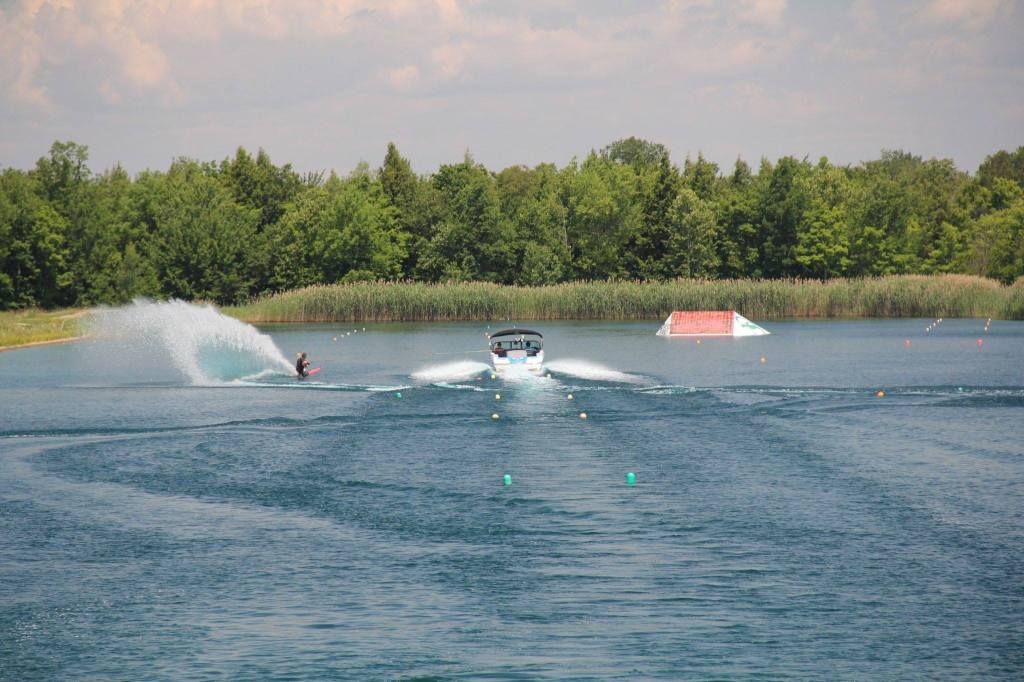
Slalom water-skiing is a sport that always ends in failure. The goal of the sport is to fail as late in your performance as possible. Trick water-skiing is like floor gymnastics except one failure during your performance ends it. You could be capable of doing your back flip 500 consecutive times but fail just once during your performance and you’re done. And jump water-skiing is an exhilarating event that requires tremendous confidence and courage to succeed. Three event skiing – whether you take part in one or all three, you must be resilient in order to succeed and become a high-achieving athlete.
What is resilience? Resilience is typically talked about in terms of recovering from trauma. However, resiliency in the field of sport and performance psychology focuses on a positive performance in the face of adversity during a given situation.1-4,6
There are many reasons us water-skiers must be resilient any time we compete because we can face these obstacles at any time and they are expected: changes in the running order, the ever-changing weather, equipment malfunctions (boat, course, ski, etc.), injuries, etc. Skiers rely on many external factors for their performance and success, all of which can change in a moment.
For elite, high-achieving skiers, resiliency plays a significant role in their successes – whether slalom, trick, and/or jump. Whether it’s the factors and obstacles they face when they compete or when they’re recovering from an injury – high-achieving athletes must be resilient. And the highest achieving athletes will have what Sarkar and Fletcher (2014) call “six superordinate themes: positive and proactive personality, experience and learning, sense of control, flexibility and adaptability, balance and perspective, and perceived social support.”1
Here are some high-achieving water-skiers I think embody these traits but have singled them out for a specific one of the six traits they excel at:
Freddie Winter – Positive and Proactive Personality
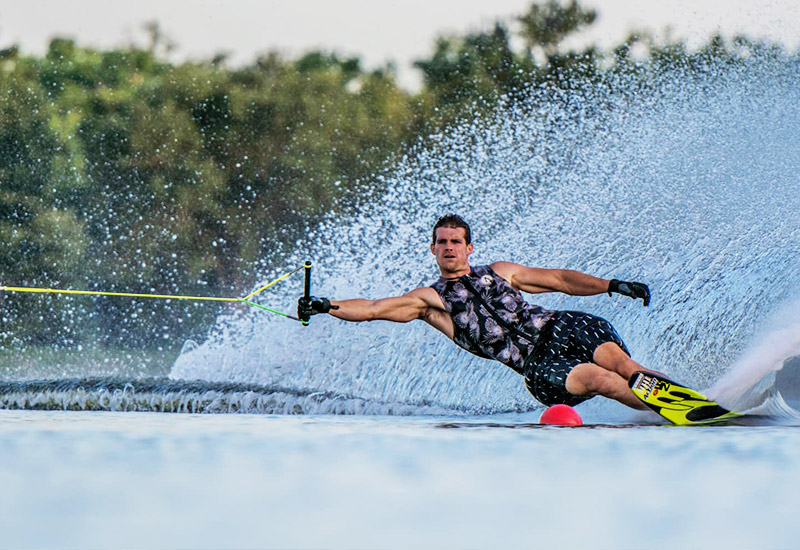
Positive and proactive personality 1-4: “Openness to new experiences, conscientiousness, optimism, and honest to oneself… continually striving for improvement, showing initiative, and constantly seeking out challenge.”1
Freddie Winter is probably one of the most recognisable names in competitive water-skiing as he was the 2017 men’s slalom World Champion. Freddie is not only known for his skiing prowess but his incredible crashes. Freddie recently added defending the Masters championship, winning the 2021 Lake 38 Pro-Am and California Pro Am tournaments to his accolades. While Freddie is one of the best slalom skiers in the world, like all athletes, he sometimes doesn’t perform his best. However, one quote I think exemplifies Freddie’s positive and proactive personality is from this year’s Malibu Open when he was speaking with commentator Tony Lightfoot after his ski broke as he approached the 5 ball at 11.25 (38’) off.
Freddie Winter: “I had a practice here yesterday and I felt absolutely terrible, so I’m a bit gutted because actually that felt quite good… World’s will be better than that, so that’s good. Bummer… I never have good luck here but it’s just my worst tournament of the year… I think I came dead last. So, that’s, uh… oh well. Anyway, such is life.”5
Tony Lightfoot: “You’re still in the lead in the Waterski Pro Tour rankings.”5
Freddie Winter: “I uh… yeah, that’s scant consolation but, I mean, I’m healthy and I’m fit. So, last three times I’ve been here I’ve had a huge crash, so I’d rather come dead last than come sixth with a big crash as I usually do… so, that’s all right.”5
Freddie had literally just come to the commentator’s booth after hopping out of the water. During these few minutes and within this conversation alone, you can see how he turns his focus from his disappointing performance, which he was honest about, to future tournaments. Freddie also makes sure he looks on the bright side of his performance – he didn’t have one of his famous crashes and he didn’t get hurt when the ski broke. Within minutes, he already changed his mindset from his unfortunate performance at the Malibu Open to remaining optimistic and looking forward to his next challenge – the IWWF World Championships. While the Malibu Open took place the first weekend of October and he didn’t even place in the top 12, Freddie went to the IWWF World Championships not two weeks later and took fourth.
Freddy Krueger – Sense of Control
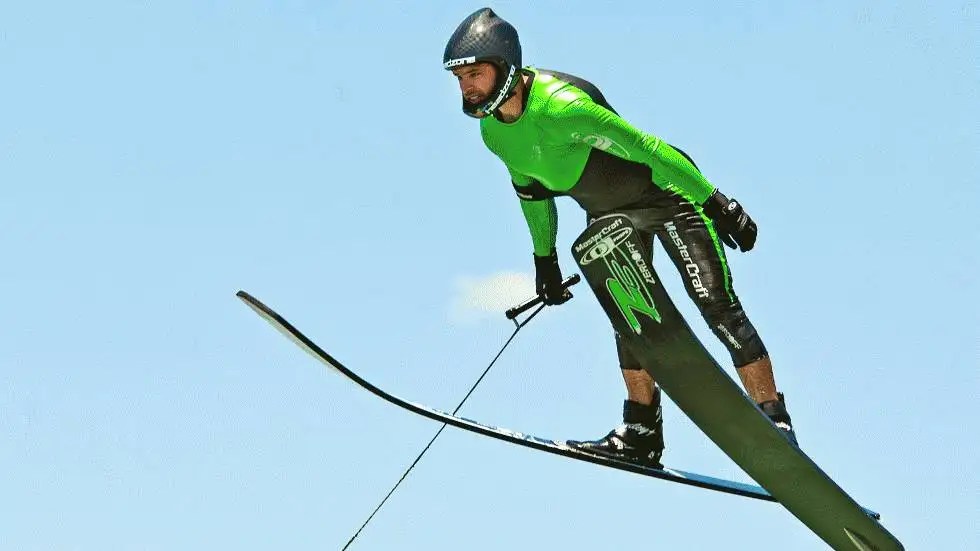
Sense of control: “Recognized their active choice to operate in demanding environments, possessed the ability to prioritize activities during dynamic situations, and positively responded to capricious circumstances.”1
For the past three decades, Freddy “The Nightmare” Krueger, has been at the top of the jump world with 14 Masters Jump Championships, 5 World Jump Championships, and 12 National Jump Championships with two National Overall Championships. Freddy continually and actively chooses to remain in these high-stress, high-demand atmospheres and competitions. Freddy won the 2021 Masters Jump Championship, showing that he is still able to acutely respond extremely well in high-pressure situations competing against other world-class athletes (some of whom were born after Freddy won his first National Overall Championship).
Freddy has grown not only as a jumper but also as a person and professional outside the ramp. Freddy is one of MasterCraft’s sponsored athletes and was one of the consultants MasterCraft worked with while redesigning the ProStar, the ultimate 3-event tournament boat. Freddy is also the supportive husband of Karen Truelove, a skiing legend in her own right, and dedicated father to their children. In his three decades of being involved in competition, Freddy has found balance not only to remain at the top of the jump sphere but to also have a hand in developing products for the water-ski industry while also working and training with his wife and kids.
Chelsea Mills – Experience and Learning
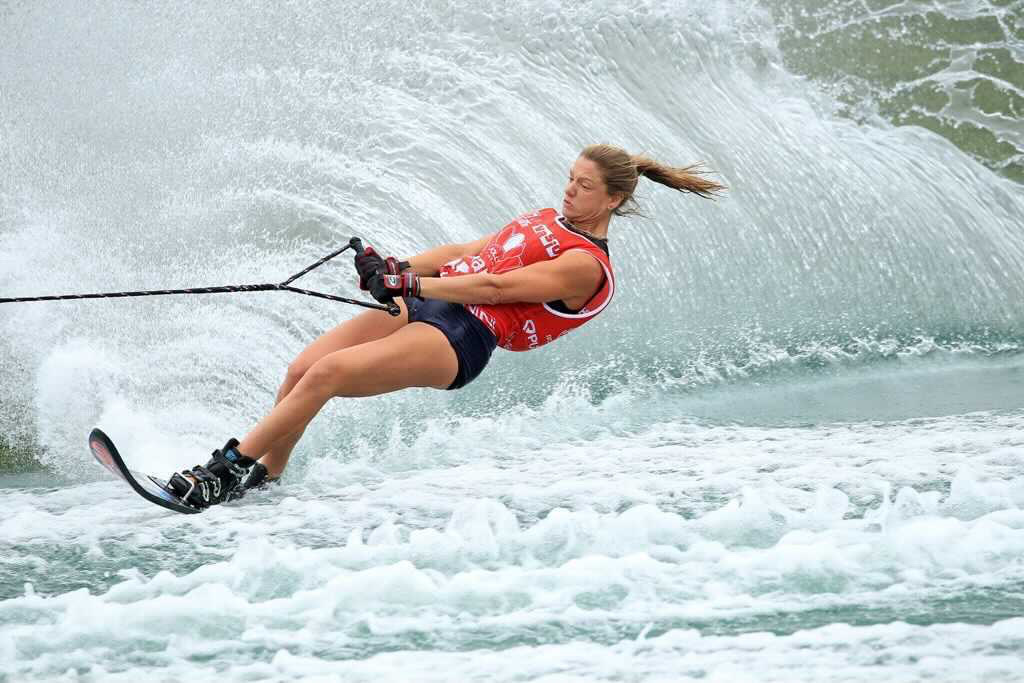
Experience and learning: “Being confronted with potentially stressful situations and learning from such incidents, consciously value challenging experiences, formal reflective practices.”1
Being able to reflect on your experiences while continuing to challenge yourself is another part of being a successful high-performance athlete.1-3,6 When asked if she was late to slalom skiing, Chelsea Mills said: “I would say super late compared to my competitors considering most of them started before age five and I started at twenty-six, so yeah, I would say it was quite late.”7 But she has taken the competition by storm where she is now ranked number six in the world for female slalom skiers. Facing competitors who had been skiing since they were children, Chelsea charged forward and enjoyed the challenge of catching up to her peers who were running short lines. The only way Chelsea has become the world-class skier she is, is by utilising every opportunity to learn and grow from her experiences where she has “Picked up a lot from various people.”7 Chelsea has never shied away from challenges because her “grit, that grind mentality”7 is what pushes her to continually practice, to reflect and learn from her experiences via peers who “help [her] to see things from a much bigger picture perspective.”7
Matteo Luzzeri – Balance and Perspective
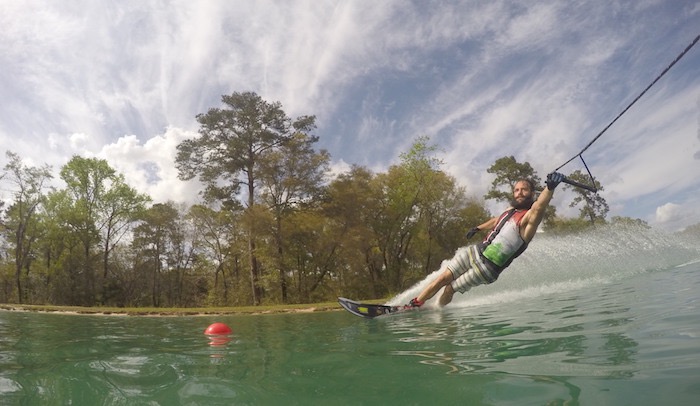
Balance and perspective1,6: “Maintaining a balance between one’s work and other aspects of life, having a sense of perspective in life, optimal work-life balance, retaining a broad sense of identity that was not too focused on a career-related role, working in various countries to gain an appreciation of different outlooks, and creating time for oneself.”1
If you know water-skiing, you’ll likely know the name and recognise the voice of Matteo Luzzeri. Originally from Bergamo, Italy, Matteo is the voice behind “The Water Ski Podcast” and is currently number 20 in the Waterski Pro Tour rankings. Balancing his professional water-skiing, water-ski coaching, and podcast hosting careers are not all Matteo does as he’s also a sports psychologist. He is actually Dr. Matteo Luzzeri. Matteo recently obtained his PhD in Sport Psychology from Florida State University, is also a Certified Mental Performance Consultant (CMPC), and has eight publications to his name.
Part of balance and perspective that Matteo also embodies is having an “appreciation of different outlooks”1 since he has competed around Europe, attended the University of Louisiana at Lafayette, and moved to Florida to obtain his doctorate. Matteo balances his work as a sports psychologist with his water-ski career and he’s able to retain his identity as a multi-faceted individual. In his first podcast of “The Water Ski Podcast,” he stated his objective with the podcast was to “try and take all these aspects of myself into the podcast,”8 which he has successfully done over the past 76 episodes. Matteo achieves an equilibrium between his career and passions while also maintaining his sense of perspective as he said in an Instagram post in 2020: “Reflecting properly during the journey is an essential skill to improve in any craft.”9
Rob “Handsome Bob” Hazelwood – Perceived Social Support
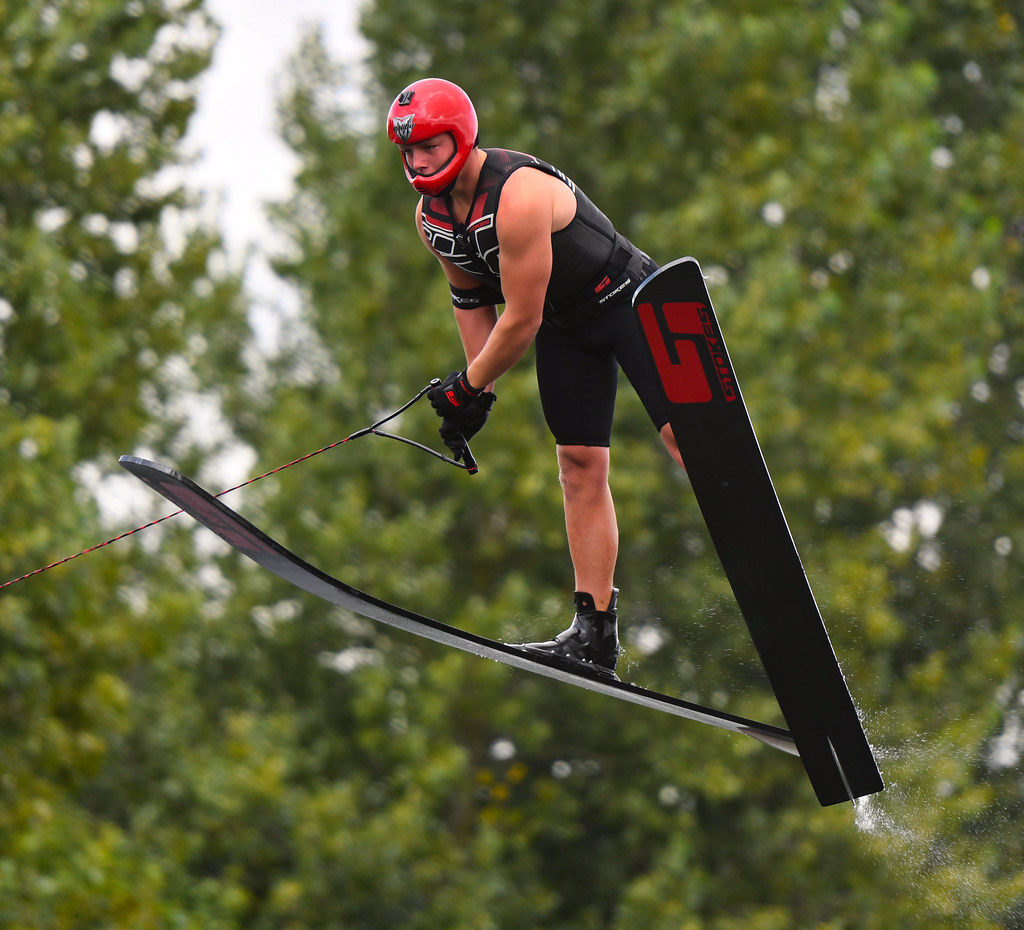
Perceived social support1-4,6: “Perceived that high quality social support was available to them and they considered this to be an important aspect. This included people from within their performance domain (e.g., colleagues and mentors), and support from individuals outside their performance domain (e.g., family and friends).”1
Rob “Handsome Bob” Hazelwood comes from a water-ski dynasty – the Hazelwood and Asher families. He is also often one of the guest announcers and colour commentators on The Waterski Broadcasting Company’s broadcasts with Tony Lightfoot. Rob is a three-event skier and YouTuber, and this 2021 season has been a bit of a breakout year for him as he took 2nd place at the California Pro Am. Part of his success is due to his social support from his family, coaches, and friends. As a Hazelwood, Rob is surrounded by former and current world-class athletes: uncles Tim and Mike Hazelwood, and his cousins, Tom and Will Asher, as well as a myriad of others.
Rob frequently thanks his family, friends, coaches, and sponsors on Instagram after tournaments. One example is from May 4th, 2021: “A huge thank you to my family and coaches especially @willasher (the fin whisperer), @thomasasher1 & @juneasher for all the help getting me ready to compete.”10 Rob clearly values the support he receives from his family as he said on “The TWBC Podcast”: “[Will Asher] supports me a lot, he helps me a lot. I wouldn’t be here without him and the support that my whole family has given me, really… it’s just a lot of support from your family, which is amazing, and I really appreciate the help that they all give me. That’s a big thing and I try my hardest to help as much as I can but I’m twenty-two and everything that I’ve learned has come from them.”11 Rob understands he has and utilises his high-quality social support inside and outside of his water-ski domain and this helps him be the elite and high-achieving athlete he is.1-4,6
Natallia Berdnikava – Flexibility and Adaptability
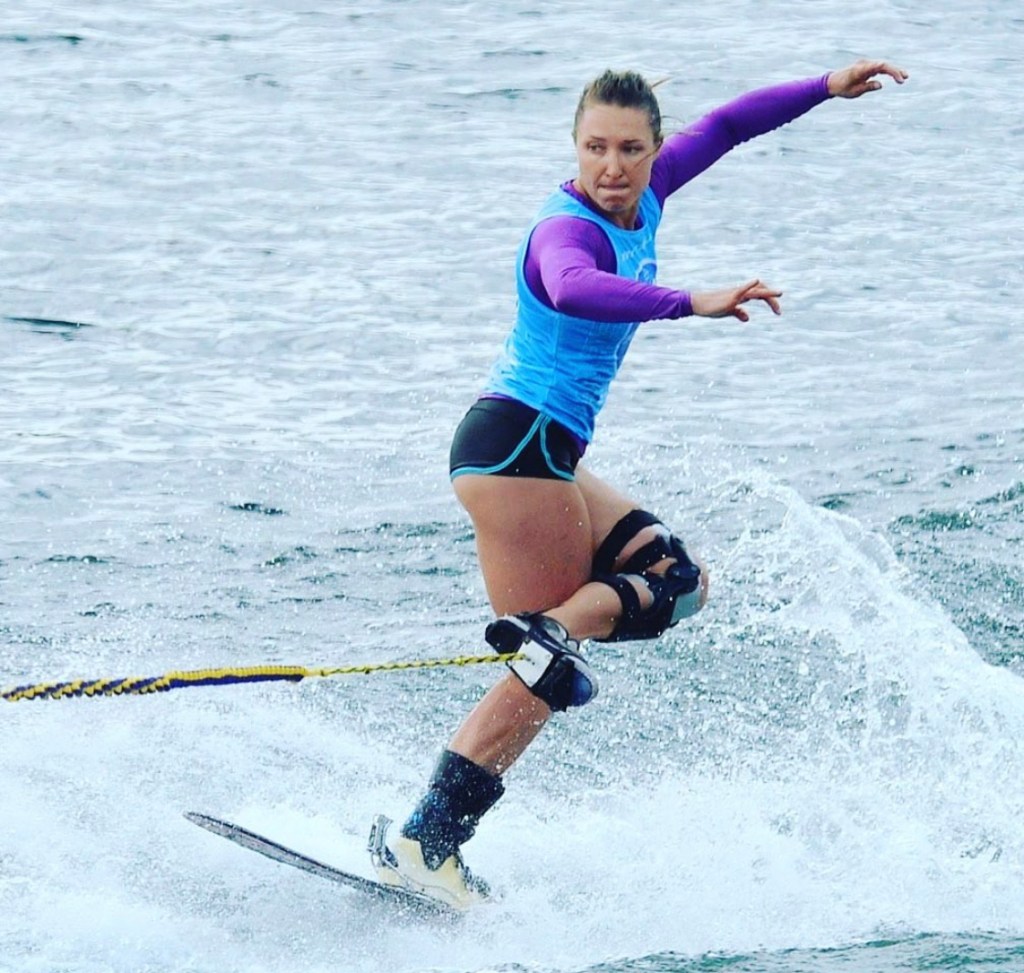
Flexibility and adaptability1,2: “Solve problems creatively, demonstrate proficiency when learning novel work practices, react positively to change, and remain politically aware when working with others, and display emotional intelligence in a wide variety of situations.”1
Natallia Berdnikava is one of the names in three-event water-skiing as she currently holds the women’s European jump record of 192 ft (58.6 m), was the first woman to trick over 9,000 points, and has multiple World Championship titles to her name. Natallia has been adaptable not only in the realm of water-skiing but in her personal life, too. From Belarus, she learned to waterski in a 50-metre pool before moving to the USA to attend college at the University of Louisiana Monroe where she struggled to speak a full sentence in English.12 But that didn’t stop her from obtaining two degrees; one in marketing and one in management while also skiing on the collegiate water-ski team.12
As a three-event skier, Natallia must embody flexibility and adaptability. At a tournament where she is going to trick, slalom, and jump, she must be able to move from one discipline to another. Tricks require skiers to adjust their set – whether they’re doing a hand pass or toe pass and depending on how they’re faring out in the 20-second pass, they must make decisions whether to attempt certain tricks or to substitute in another trick. While Natallia became the 2011 World Overall Champion, she soon faced a spate of knee injuries that made her think about the life in front of her.
Natallia said: “I took a break two and a half years, I got my baby, it was just too hard for me to start skiing again and I was like ‘Oh, it’s fine. It’s over for me, it’s fine.’”12 She had adapted to and accepted her perceived new role in life as a mum, wife, and coach and was ready to move on from competition life. However, with support from family and friends Natallia re-entered the competition sphere after adapting to her changed life and ensuring her body was capable of the gruelling demands. Natallia placed fifth in overall women’s tricks in the 2021 IWWF Worlds at her home site at Sunset Lakes at the Jack Travers Water Ski School in October. So, we may just see Natallia come back stronger than before!
The previously mentioned elite, competitive water-ski athletes are resilient, high-achieving athletes and have sustained success because of combinations of their “personality, motivation, confidence, focus, and support” factors.13 They all have strong aspects of drive, are intrinsically driven (there’s not much money in competitive water-skiing), belief in their skills and abilities, can maintain focus during adverse conditions, and have support networks that challenge them to grow.1-4,6,13,14
So, how can you become more resilient and work toward being a high achieving athlete and/or water-skier?
All these high-achieving water-skiers are resilient because of their personal qualities (embodying each of the six previously listed traits as well as other personality characteristics), training and competing in facilitative environments, and having a challenge mindset.1-4,6,10,13,14 These elite athletes live in facilitative challenge environments – environments where they receive appropriate support in pursuit of a goal while they are challenged to improve and work beyond their comfort zone.10 Personal qualities like being a perfectionist, wanting to improve, and engaging in activities for nothing beyond the enjoyment of the activity all contribute to a person’s resilience and high-achieving capabilities.1-4,6,13,14 Part of being resilient and being a high achiever is having psychological skills and coping methods like positive self-talk, visualisation, and being able to regulate one’s emotions in high-pressure situations.1-4,6,13,14
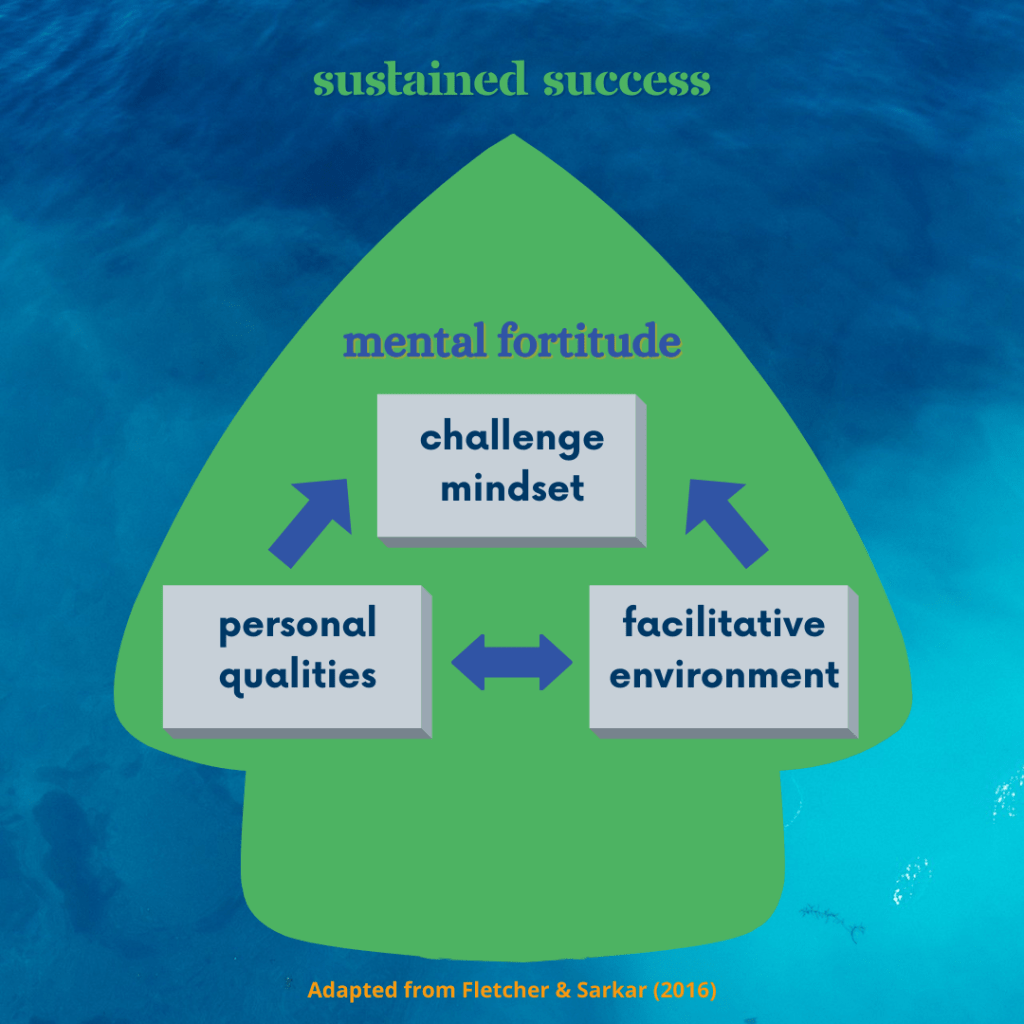
You can also become more resilient through failures. You know the saying, “What doesn’t kill you only makes you stronger”? Turns out, there’s truth to that in sports psychology. Failure can be a driver of success.4,14 In Olympians, it was shown that when they failed and failed hard, it could be the catalyst of their future success because that failure motivated them to train harder, reflect on their experience(s), and push themselves to their limits.6,14 And your resiliency doesn’t just come from failures in sport but hardships in any aspect. When you experience adversity in your life, you can grow from these experiences.3 And having a growth mindset, believing that you are capable of growth, is crucial to your resiliency and future performance(s).3,4,6,14 Instead of singularly focusing on what you are feeling, it is important to ask yourself why you are feeling the way you do.14 By being self-aware, using critical introspection, and reflecting on your experiences and the whys, you can challenge yourself to grow from there.14-16
To re-cap, here are some ways to work on becoming more resilient and a high achieving athlete1-4,6,13-15:
- Adopt and practice a growth mindset
- When you stumble or fail, practice saying that you are not there yet
- Believe in your current skills and abilities as well as in your capability to grow
- Reflect on the experience and ask why you feel the way you do
- Look for the bright side(s) or silver lining(s) of situations
- Find and participate in facilitative challenge environments where you are not only pushed out of your comfort zone(s) but are offered support when you need it
- Cultivate and use your support networks
- Set SMART goals (specific, measurable, attainable, realistic, and timed)
- Utilise skills in self-talk, imagery, visualisation, and mental rehearsal
- Plan for “what-if” scenarios and have back-up plans
- Practice self-awareness, reflection, and active engagement
- Make sure you are engaging in the sport/activity because you enjoy it
One quote I think embodies the growth mindset and the central idea of resiliency, which I feel is a good place to end, is by Colonel Potter from M*A*S*H: “It’s too big a world to be in competition with everybody else. The only guy I have to get better than is who I am right now.”16
If you have any comments or questions, please either leave a comment on this blog or e-mail me at svgarrity@gmail.com.
– Sam Garrity, MSc Sport and Exercise Psychology student at Loughborough University ’22
References
- Sarkar M, Fletcher D. Ordinary magic, extraordinary performance: Psychological resilience and thriving in high achievers. Sport Exerc. Perform. Psychol. 2014;3(1):46-60. doi:10.1037/spy0000003
- Fletcher D, Sarkar M. Psychological resilience: A review and critique of definitions, concepts, and theory. Eur. Psychol. 2013;18(1):12-23. doi:10.1027/1016-9040/a000124
- Fletcher D, Sarkar, M. A grounded theory of psychological resilience in Olympic champions. Psychol Sport Exerc. 2012;13:669-678. doi:10.1016/j.psychsport.2012.04.007
- Sarkar M, Fletcher D. Psychological resilience in sport performers: A review of stressors and protective factors. J. Sports Sci. 2014;32(15):1419-1434. https://doi.org/10.1080/02640414.2014.901551
- The Waterski Broadcasting Company. 2021 Malibu Open – Day 1. [Video]. YouTube. https://youtu.be/fMpxEcOOBlI?t=27864 Published October 1, 2021. Accessed December 4, 2021.
- Fletcher D, Sarkar M. Mental fortitude training: An evidence-based approach to developing psychological resilience for sustained success. J. Sport Psychol. Action. 2016;7(3):135-157. https://doi.org/10.1080/21520704.2016.1255496
- Lightfoot T. The TWBC Podcast. Face-to-Face with Chelsea Mills. October 2, 2021. Accessed December 3, 2021. https://www.waterskibroadcasting.com/podcast/face-to-face-with-chelsea-mills/
- Luzzeri M. The Water Ski Podcast. EP1: Welcome to the Water Ski Podcast. August 26, 2019. Accessed December 4, 2021. https://www.thewaterskipodcast.com/podcast/files/archive-august-2019.php
- @luzzgram. Last line of my ski notebook at the end of the 2020 season. I have been working towards it in the offseason, but it was reassuring to see the confidence with which I ended up in December. Reflecting properly during the journey is an essential skill to improve in any craft. Who knows, I might record an episode in the near future just about that 🤷🏻♂️😁. Accessed December 3, 2021. https://www.instagram.com/p/CMNXZ8aB64f/?utm_source=ig_web_copy_link
- @robhazelwood99. What a day! Everything just came together at the right time and I had by far the most fun I’ve ever had on a slalom ski (as most of you noticed by my post ski interviews 😂)! A huge thank you to my family and coaches especially @willasher (the fin whisperer), @thomasasher1 & @juneasher for all the help getting me ready to compete. Another big thank you to the team at Swiss and @thewaterskibroadcastingcompany for webcasting, judging and putting on an amazing event! 📸- @jmommer2. https://www.instagram.com/p/COdjL2rrJwU/
- Lightfoot T. The TWBC Podcast. Face-to-Face with Robert Hazelwood. August 29, 2021. Accessed December 3, 2021. https://www.waterskibroadcasting.com/podcast/face-to-face-with-robert-hazelwood/
- Lightfoot T. The TWBC Podcast. Face-to-Face with Natallia Berdnikava. October 13, 2021. Accessed December 3, 2021. https://www.waterskibroadcasting.com/podcast/face-to-face-with-natallia-berdnikava/
- Fletcher D. Psychological resilience and adversarial growth in sport and performance. In: Acevedo EO, ed. The Oxford Encyclopedia of Sport, Exercise, and Performance Psychology. New York City, NY: Oxford University Press; 2019:731-756.
- Sarkar M, Fletcher D, Brown, DJ. What doesn’t kill me…: Adversity-related experiences are vital in the development of superior Olympic performance. Med Sci Sports Exerc. 2015;18:475-479. http://dx.doi.org/10.1016/j.jsams.2014.06.0101440-2440
- Dweck C. What having a “growth mindset” actually means. Harvard Business Review. Published January 13, 2016. Accessed December 3, 2021. https://hbr.org/2016/01/what-having-a-growth-mindset-actually-means
- Alda A. Hepatitis. M*A*S*H [Television series]. New York, NY: CBS-TV;1977.
 S. V. Garrity Academic & Athletic Support Specialist LLC
This was really interesting. I knew nothing about the sport or it’s athletes I liked how it highlighted athletes successes by sharing HOW they became successful.
LikeLike
Hi Kathryn – thank you for reading! I appreciate it!
LikeLike
I am involved in the sport and I’m aware of all these athletes but I learned many new and fascinating things about each of them. I thought you did an excellent job of then highlighting how to apply these characteristics to ones personal goals and ambitions. Nicely done.
LikeLike
Hi Dave – thank you so much for your comment. It means a lot to me that someone such as yourself, an accomplished skier in your own right, enjoyed reading this post!
LikeLike
Hi Sam! This was an interesting and well written read as I do not know anything about the sport. You mentioned at the start that the goal of the sport is to fail as late in your performance as possible? Isn’t this a bit of a negative way to view the sport, as something that will always end in failure?
LikeLike
Hi Meghan – thank you for reading this! Yes, I concede you might have a point. As a slalom skier myself, it’s something some of us say in the community. Slalom skiing revolves around skiing around 6 buoys and through entrance and exit gates. As you complete this, you cut the rope length and/or increase the speed up to 34/36 mph (34 for women, 36 for men). As you do these things, it becomes harder to get around the buoys and through the gates. There is no perfect score or “winning,” so that’s where the saying comes from. So, it is a bit of a joke in the sport.
LikeLike
Ah okay, thanks for explaining!
LikeLike
Really great read, Sam! I loved the way you broke down the many psychological characteristics displayed in these athletes, as well as clearly laying out how we can improve on these skills ourselves. I am definitely going to adopt a growth mindset in my own gym routine and football training, and trust that this will improve my resilience in the long term. I thought the sporting examples used were extremely interesting and it was great learning about a sport that I was not so familiar with before!
LikeLike
Hi Henry – thank you so much for the read and your comment! I definitely believe adopting a growth mindset – whether in sports, academia, or your professional life to be extremely beneficial and a major facilitator of growth! I’m glad you enjoyed learning a bit about my favorite sport!
LikeLike
I absolutely love the way you’ve written this blog 😍 choosing athletes which embody the traits you are talking about is so creative and really helps you to understand what a real life example of these things would look like. I think presenting it in this way was a really smart and effective choice which has helped inspire me to put the resilience model into practice. Thank you for this!
LikeLike
Hi Lydia – thank you so much for your comment and kind words! I am glad you found the layout of the article helpful in enhancing one’s understanding of resilience in sports.
LikeLike
Hi Sam! This was a lovely article. It was great to see the constructs you talked about actually being exemplified by high-achieving people in waterskiing—I think that made your article much more relatable. I also liked the short but comprehensive tips towards the end; I think we can all use these in our own performance domains!
LikeLike
Hi Zsofia – Thank you so much! I am glad it was relatable to non-waterskiing folks.
LikeLike
Hi Sam, I really enjoyed reading this blog, I really like how you have linked the traits to athletes. I also believe that these traits can be easily transferred to other sports as well. I will be trying to add some of these traits to myself and my sporting performance as well as those that I coach. Thank you for this insight.
LikeLike
Hi Jade – thank you for your comment! I greatly appreciate your time and insight.
LikeLike